
Afinio
AI Organisational Intelligence
Principal Product Designer
Designed and built an AI platform that lets people ask their organisation a question and get to the right colleague, document or decision.
Impact:
8 demos, 2 pilots running and 3 more planned for early 2027
Testing indicated up to 20% lower employee turnover and up to 90 minutes a day saved per employee
Pivoted the product within months, based on discovery with 10 organisations and consultants
My Role & Scope
I was the sole designer and product lead, from discovery to a working product. I defined the human-AI interaction model and built the platform end to end with AI coding tools.
Key constraints
AI answers about people must be trustworthy
Respect existing permissions and privacy
Fit into Slack, Teams and existing tools
Small team, fast iteration
The Problem
In knowledge-heavy organisations, the answer usually already exists: in someone's head, an old project or a Slack thread. People can't find it, so they redo work or decide without it.
The challenge was to design an AI layer people would trust with questions about colleagues and company knowledge, inside the tools they already use.
Key UX Metric
Success is measured by time-to-answer: how quickly someone gets from a question to the right person, document or decision, and acts on it.
Design decisions focused on clear sources, fewer steps and a useful next action in every answer.
Design Decision 1:
One Question, Not a Search
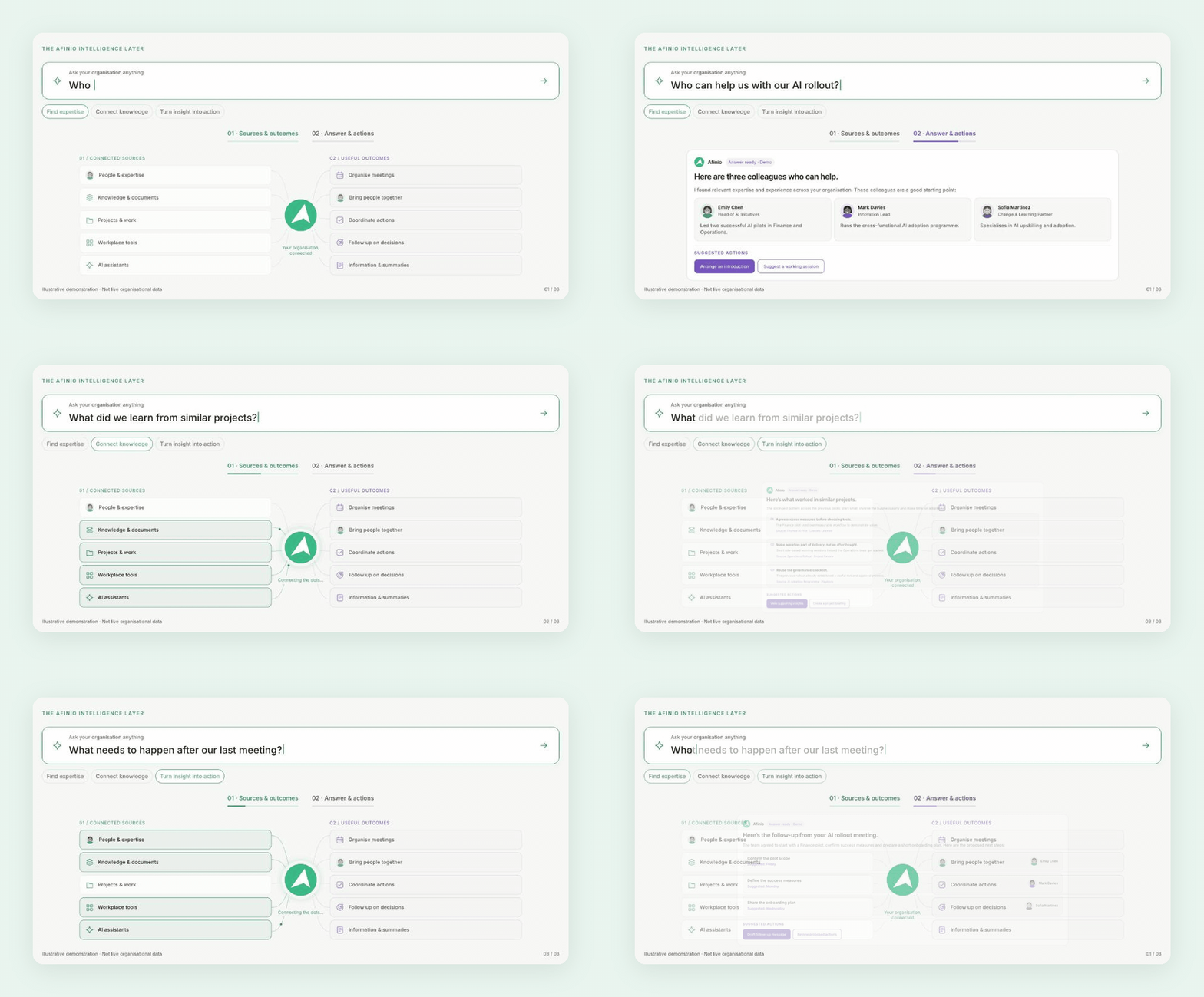
People don't know where knowledge lives, so I replaced search with a single question box. You ask in plain language and Afinio connects people, documents, projects and tools to answer it.
Design Decision 1:
One Question, Not a Search
People don't know where knowledge lives, so I replaced search with a single question box. You ask in plain language and Afinio connects people, documents, projects and tools to answer it.
This keeps the interface simple, while the intelligence works in the background.
Design Decision 2:
Show Where Answers Come From
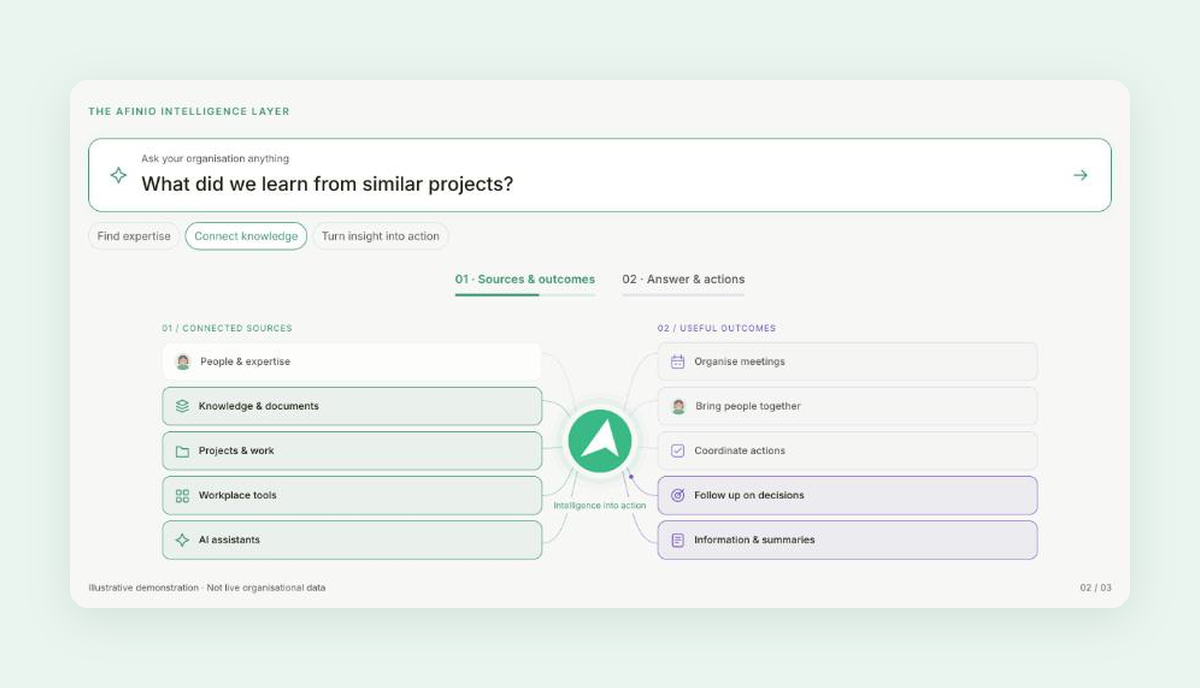
An AI answer about colleagues or past work is only useful if people trust it. Every answer shows the connected sources behind it and the outcomes it can lead to.
Making the reasoning visible turned a black box into something people could check.
Design Decision 3:
From Answer to Action
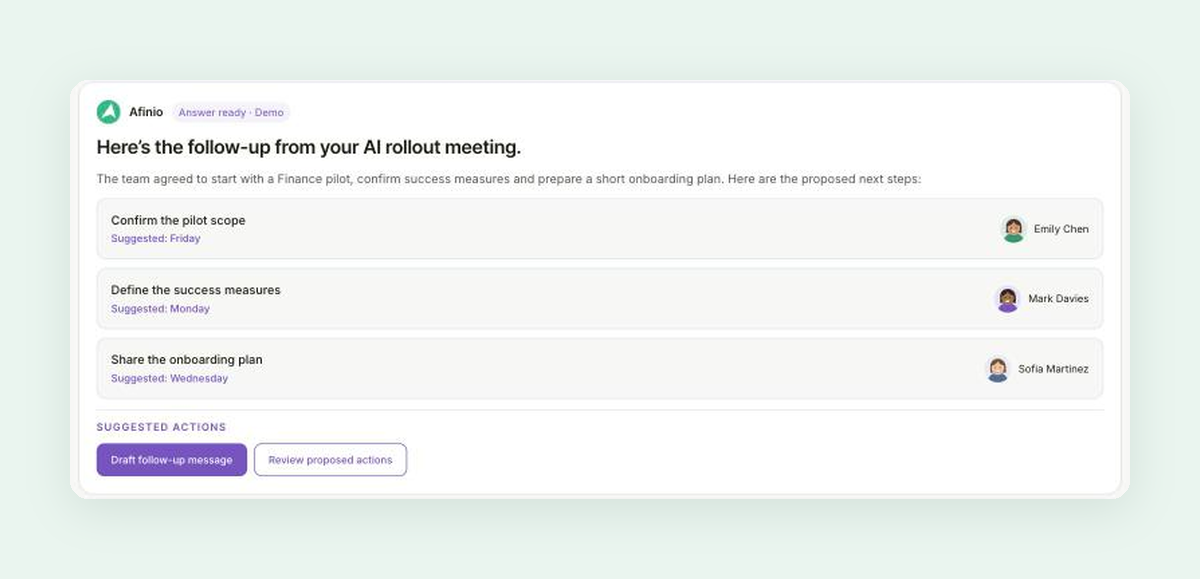
Finding information is only half the job. Each answer ends with clear next steps, owners and suggested actions, such as drafting a follow-up or arranging an introduction.
People confirm every action, so the AI suggests and the person decides.
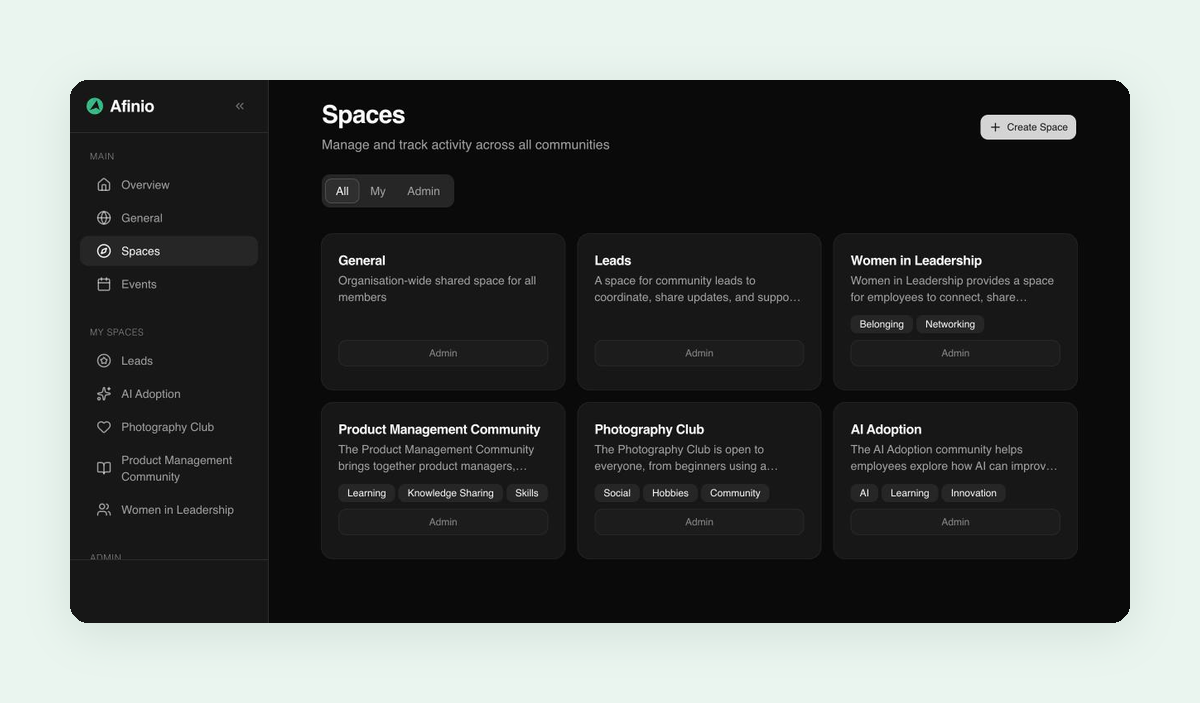
Design Decision 4:
Build on What Worked
Afinio started as a platform for employee communities. Feedback showed a bigger need: connecting knowledge and expertise across the organisation.
I pivoted within months and carried over the patterns people already valued, like spaces and shared context.
Outcome
Afinio has run 8 demos, with 2 pilots underway and 3 more planned for early 2027. Testing indicated it could reduce employee turnover by up to 20% and save employees up to 90 minutes a day.
The key lesson: trust is designed, not assumed. Visible sources and a clear next step are what make AI answers usable at work.
20%
Disclaimer
The latest version of Afinio is in stealth mode. Screens shown are from the public demo and the earlier platform, with illustrative data.